Moving goods rarely follows one road. A shipment may leave a factory by truck, cross an ocean by ship, then reach a customer by rail and van. This connected approach raises a practical question: what is multimodal transportation in logistics? In simple terms, it moves cargo through two or more transport modes under one coordinated logistics plan. The goal is not merely speed. It is dependable movement from origin to destination.
In real operations, multimodal transport depends on accurate schedules, suitable containers, transfer points, and clear responsibility. A freight planner might compare a direct truck route with truck-rail transport. The second option may reduce highway exposure and fuel use, yet add handling time at a terminal. A sealed container can simplify transfers. However, it does not remove every risk. Weather, congestion, equipment shortages, and incomplete shipment data can still disrupt delivery. Experienced teams track milestones, confirm documentation, and build realistic buffer time. They also check cargo requirements before choosing a mode. Small details matter, such as whether a pallet can fit safely through a warehouse door.
This article explains the operating logic behind multimodal transportation. It examines planning, cost, visibility, environmental considerations, and performance measurement. Reliable decisions should use carrier records, terminal data, and verified service commitments rather than attractive estimates alone. Industry practice also changes by region and cargo type, so one solution cannot fit every shipment. That limitation deserves attention. A route that works well for boxed electronics may fail for temperature-sensitive products. Understanding these trade-offs helps shippers, logistics managers, and students judge options with greater clarity. The best plan is not always the fastest. It is the one that remains controlled when conditions change.
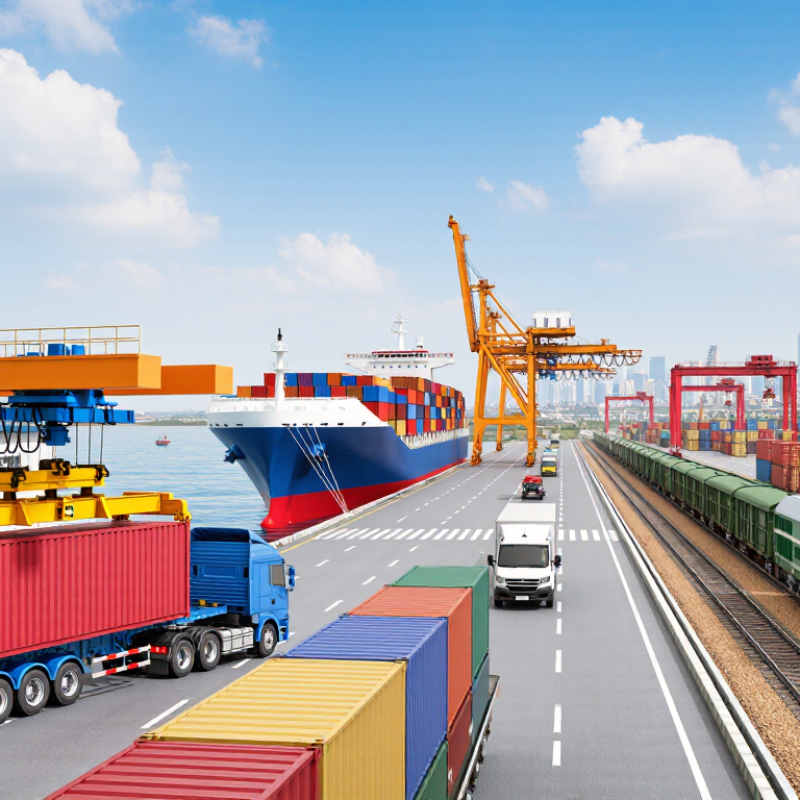
Define Multimodal Transport: One Contract, Multiple Transport Modes
How to Understand Multimodal Transportation in Logistics
Define Multimodal Transport: One Contract, Multiple Transport Modes
Multimodal transport moves cargo through several modes under one contract. A shipment may travel by truck, rail, vessel, and truck again. The shipper works with one principal transport provider, rather than arranging every stage separately. This creates a clearer commercial relationship. It also reduces coordination work.
The process begins with a planned route and defined handoff points. For example, a sealed container may leave a warehouse by truck, transfer to rail, and reach a port by road. One transport document records the journey. The contract should explain delivery responsibilities, cargo information, claims procedures, and applicable transport rules. Tracking data should also show when custody changes.
Details matter greatly. A late rail connection can leave a container waiting beside a terminal gate. A damaged seal may raise questions about when the loss occurred. Reliable operators check container numbers, loading photos, temperature records, and delivery timestamps. They also review local requirements before moving cargo across borders. One contract does not remove every risk. It can simplify accountability, but unclear terms still create disputes. In practice, multimodal planning is efficient, yet it demands careful communication between warehouses, terminals, drivers, and documentation teams. Small gaps remain possible. That is where human review still matters.
How to Understand Multimodal Transportation in Logistics
One Contract, Multiple Transport Modes
Multimodal transport moves cargo through two or more transport modes under one transport contract.
Combining road, rail, inland waterway, sea, or air services can improve connectivity while balancing
speed, cost, capacity, and environmental impact.
The chart shows representative freight-emission factors in grams of CO₂e per tonne-kilometre.
Values are rounded benchmarks based on publicly available 2024 government conversion-factor data;
actual emissions vary according to vehicle type, load factor, route, fuel, and operating conditions.
Compare Road, Rail, Sea and Air Using UNCTAD’s 80% Sea-Trade Share
How to Understand Multimodal Transportation in Logistics
Compare Road, Rail, Sea and Air Using UNCTAD’s 80% Sea-Trade Share
UNCTAD reports that more than 80% of global trade by volume moves by sea. This figure explains why ocean transport remains central to international logistics. A container may spend weeks crossing water, then reach a rail terminal or distribution center. Sea freight usually offers the lowest cost for heavy, non-urgent cargo. However, schedules can change because of storms, port congestion, or equipment shortages.
Road transport provides flexible door-to-door delivery. A truck can collect pallets from a factory and deliver them to a warehouse the same day. Rail is often faster than sea over long land routes, while producing fewer emissions than road transport. Yet rail depends on fixed routes, terminal capacity, and border procedures. Air freight is the fastest option for urgent, lightweight goods, but its high cost limits regular use.
In practical planning, multimodal transport connects these strengths. A shipment might travel by truck to a rail terminal, continue by rail to a port, cross the sea, and finish by truck. Timing matters at every handoff. One missed connection can erase the expected savings. Cost comparisons also need fuel, handling, insurance, storage, and delay risks. The 80% sea-trade share is powerful evidence, but it does not make sea freight the best choice for every shipment. The real decision remains imperfect. It depends on distance, cargo value, delivery pressure, and network reliability.
How to Understand Multimodal Transportation in Logistics - Compare Road, Rail, Sea and Air Using UNCTAD’s 80% Sea-Trade Share
More than 80% of global merchandise trade by volume is transported by sea, according to UNCTAD. The figures below are representative industry ranges; actual performance varies by route, cargo type, infrastructure, weather, border procedures and service design.
| Mode |
Typical operating profile |
Indicative capacity |
Typical line-haul speed |
Relative cost position |
Typical carbon profile |
Main advantages |
Main constraints |
| Road |
Short- and medium-distance collection, delivery and regional distribution |
Approximately 1–25 tonnes per vehicle, depending on vehicle class and regulations |
About 60–90 km/h while moving; lower door-to-door averages in congested areas |
Medium |
Generally higher emissions per tonne-kilometre than rail or sea; strongly affected by load factor and fuel type |
High network coverage, flexible routing, direct door-to-door service and frequent departures |
Road congestion, driver availability, tolls, fuel costs, weather and lower efficiency for long distances |
| Rail |
High-volume inland movement over medium and long distances |
Often 500–5,000+ tonnes per freight train, depending on route, train length and infrastructure |
About 40–80 km/h in service, including operational restrictions and scheduled stops |
Low to medium |
Usually lower emissions per tonne-kilometre than road, especially on electrified or efficiently operated networks |
High capacity, efficient energy use, reliable long-distance movement and reduced highway dependence |
Fixed routes, limited first- and last-mile reach, transshipment requirements and infrastructure bottlenecks |
| Sea |
International and coastal transport of containers, bulk commodities, vehicles and heavy project cargo |
From several hundred tonnes on smaller vessels to more than 200,000 tonnes on large bulk or tanker vessels; container vessels are measured in TEU |
Approximately 18–25 knots, or 33–46 km/h, for many ocean services |
Lowest for large-volume long-distance moves |
Typically among the lowest emissions per tonne-kilometre, although vessel type, fuel, speed and port operations matter |
Very high capacity, global reach and strong economies of scale; explains why sea carries over 80% of world merchandise trade by volume |
Slow transit, port congestion, weather exposure, schedule variability and dependence on inland connections |
| Air |
Urgent, high-value, perishable or time-critical international shipments |
Typically several tonnes to more than 100 tonnes per aircraft, depending on aircraft type and available cargo space |
About 800–900 km/h cruising speed; total transit time also includes handling, security and customs |
Highest |
Generally the highest emissions per tonne-kilometre among the four modes, particularly for heavy or low-density cargo |
Fastest long-distance option, broad international reach and high schedule frequency on major corridors |
High freight rates, limited capacity, strict security and handling rules, airport dependence and payload restrictions |
Best for lowest cost:
Sea for large international volumes; rail for suitable inland corridors.
Best for speed:
Air for long-distance urgent cargo; road for flexible regional delivery.
Best for lower emissions:
Sea and rail generally perform better than road and air on a tonne-kilometre basis.
Typical multimodal pattern:
Sea or rail for the main leg, road for first and last mile, and air only when time value justifies the premium.
Reference note: The sea-trade share reflects UNCTAD’s widely cited estimate that over 80% of global merchandise trade by volume is carried by sea. Capacity, speed, cost and emissions values are indicative ranges synthesized from standard transport-engineering and logistics benchmarks, including guidance commonly reported by UNCTAD, the International Transport Forum, the International Energy Agency and European environmental agencies.
Map End-to-End Shipments Through Hubs, Terminals and Digital Tracking
How to Understand Multimodal Transportation in Logistics
Multimodal transportation moves one shipment through several transport modes under one coordinated plan. A typical route may begin at a supplier, continue by truck, pass through a rail terminal, and reach a distribution hub before final delivery. The route map should show every handoff, not only the origin and destination. Record loading times, container numbers, terminal gates, responsible teams, and planned arrival windows. Small gaps often create large delays.
Digital tracking connects physical movement with operational decisions. GPS data can show a vehicle’s location, while terminal scans confirm that cargo actually entered a facility. These signals are different. A map becomes more reliable when teams compare them with booking records, customs documents, and warehouse updates. In practice, information may arrive late or contain errors. The map is never perfect. It should show confidence levels and flag missing events instead of hiding them.
Tips: Build the route from real milestones. Mark each hub, terminal, mode change, and expected handoff. Use consistent time zones. Assign one owner to every exception. Review dwell time at terminals weekly, because waiting cargo can cost more than movement. Test the tracking process with a delayed shipment, not only a smooth one. That reveals weak alerts, unclear responsibilities, and assumptions that looked reasonable on paper.
Measure Cost, Time and Emissions Against IMO’s ~3% Shipping-Emission Share
How to Understand Multimodal Transportation in Logistics
Multimodal transport links ships, trains, trucks, and sometimes barges. The measurement challenge begins at the handover. A container may wait six hours beside a rail terminal, then travel 400 kilometers overnight. Each stage changes the cost, delivery time, and carbon result.
The IMO’s Fourth GHG Study estimated that shipping produced 2.89% of global anthropogenic greenhouse-gas emissions in 2018. That share sounds small. Its scale is not. UNCTAD’s Review of Maritime Transport reports that ships carry over 80% of global merchandise trade by volume. A logistics plan should therefore measure shipping’s efficiency, not only its percentage of emissions.
Use cost per container, transit time, dwell time, and emissions per tonne-kilometer. The GLEC Framework recommends activity-based calculations using distance, cargo weight, fuel, and vehicle efficiency. For example, a sea leg can reduce emissions, but a poorly planned truck connection may erase part of that gain. The European Environment Agency also finds major differences between road, rail, and waterborne freight emission intensities.
The comparison is rarely perfect. Empty return trips, terminal electricity, weather delays, and cargo consolidation can distort results. I have seen the fastest route look cleaner until waiting time and repositioning were included. That is the uncomfortable part. Data quality still decides the credibility of the claim.
A practical dashboard should show three figures together: landed cost, door-to-door hours, and kilograms of CO2e per shipment. Otherwise, a low-emission ocean leg may hide an expensive or unreliable final connection.
Manage Documents, Liability and Risks Across Carriers and Borders
Multimodal transportation connects road, rail, sea, and air carriers in one shipment.
Each transfer can change the responsible party, document set, and risk profile. A smooth route can still fail when records do not match.
In daily logistics work, the transport file should show every handover, seal number, package count, and delivery condition. Keep the commercial invoice, packing list, transport documents, insurance details, and customs data consistent. Small differences in weight or description can trigger delays at a border. Verify which carrier controls each movement and when liability transfers. The contract should state these points clearly, including the chosen delivery terms and claim procedures. Do not rely on informal emails alone.
Liability becomes harder to assess when cargo crosses several jurisdictions. Rules, limitation periods, and evidence requirements may differ after every border. Photos at loading and unloading provide useful evidence. So do temperature records, GPS events, and signed exception notes. Use one shared timeline for the shipment. It helps teams identify where damage or delay likely occurred. A recurring weakness is assuming that insurance covers every loss. It may exclude poor packaging, delay, or incomplete declarations. Check the wording before dispatch.
Perfect control is unrealistic.
Human error remains. Build review points into the route, especially before handovers and customs submission. When a document looks unclear, stop and verify it with the responsible carrier and qualified local advisers.
FAQS
More than 80% of global trade by volume moves by sea. It suits heavy, non-urgent cargo. A container may spend weeks crossing water.
Road transport offers flexible, door-to-door delivery. A truck can collect pallets from a factory and reach a warehouse the same day. It is highly adaptable.
Rail can move cargo faster than sea across long land routes. It often creates fewer emissions than road transport. Fixed routes can limit flexibility.
Air freight suits urgent, lightweight goods with strict delivery deadlines. Its high cost makes regular use difficult. Speed comes at a price.
It combines several transport modes under one coordinated plan. Cargo may travel by truck, rail, sea, and truck again. Every handoff matters.
Record suppliers, hubs, terminals, mode changes, container numbers, gate times, and planned arrival windows. Assign one owner to each exception. Missing details create hidden delays.
GPS can show vehicle movement, while terminal scans confirm cargo entry. Teams should compare these signals with bookings and warehouse updates. The map can still lie.
Include fuel, handling, insurance, storage, and delay risks. A cheap ocean rate may lose value after long terminal waiting. Our estimate may be wrong.
Test the process with a delayed shipment, not only a smooth delivery. Check alerts, responsibilities, and missing events. Problems appear under pressure.
Conclusion
What is multimodal transportation in logistics? It is the coordinated movement of goods through two or more transport modes under one integrated contract, such as combining road, rail, sea, and air services. Each mode offers different strengths: roads provide flexible local delivery, rail supports efficient inland transport, sea handles large international volumes, and air delivers speed for time-sensitive shipments. Since maritime transport carries roughly 80% of global trade by volume, understanding how these modes connect is essential to effective logistics planning.
A multimodal shipment should be mapped from origin to destination, including hubs, terminals, transfer points, and digital tracking systems. Logistics managers can compare total cost, delivery time, reliability, and emissions, while recognizing that shipping contributes approximately 3% of global emissions. Strong document control, clear liability arrangements, accurate customs information, and careful risk management help coordinate multiple carriers and borders. When properly designed, multimodal transport improves visibility, efficiency, resilience, and sustainability across the entire supply chain.

 AeroLoad Logistics