How to Ship Products to Amazon FBA from China

Time:2026-09-23 Author:Aria
0%

Shipping products from China to Amazon FBA requires more than finding a low-cost supplier. It requires coordinated planning, accurate paperwork, and realistic delivery expectations. Amazon’s 2024 Annual Report states that independent sellers generated more than 60% of paid units sold in its stores. That figure shows the opportunity. It also shows the competition.

China remains a major manufacturing and export hub. According to China’s General Administration of Customs, China’s exports reached approximately RMB 25.45 trillion in 2024. For sellers, this large supply network can provide competitive pricing and flexible production. However, factory access does not guarantee smooth delivery. A small carton-label error can delay receiving at an Amazon fulfillment center. A missing commercial invoice can create costly customs questions.

This guide explains how to ship products to amazon fulfillment centers from China, using practical steps for supplier checks, product preparation, freight selection, customs coordination, and Amazon shipment creation. It covers air freight, ocean freight, express delivery, and common delivery terms such as FOB and DDP. The World Bank’s 2023 Logistics Performance Index also reminds sellers that logistics reliability depends on more than speed. Customs quality, tracking, infrastructure, and timeliness all matter.

A cheap quote may hide fees.

Real costs often appear later.

The process is not perfect, even for experienced sellers. Product dimensions may change, cartons may be mislabeled, and delivery estimates may slip during peak seasons. Careful verification remains essential. Sellers should confirm current Amazon requirements, work with qualified logistics professionals, and keep records for every shipment. This approach supports safer decisions, clearer communication, and more dependable inventory planning.
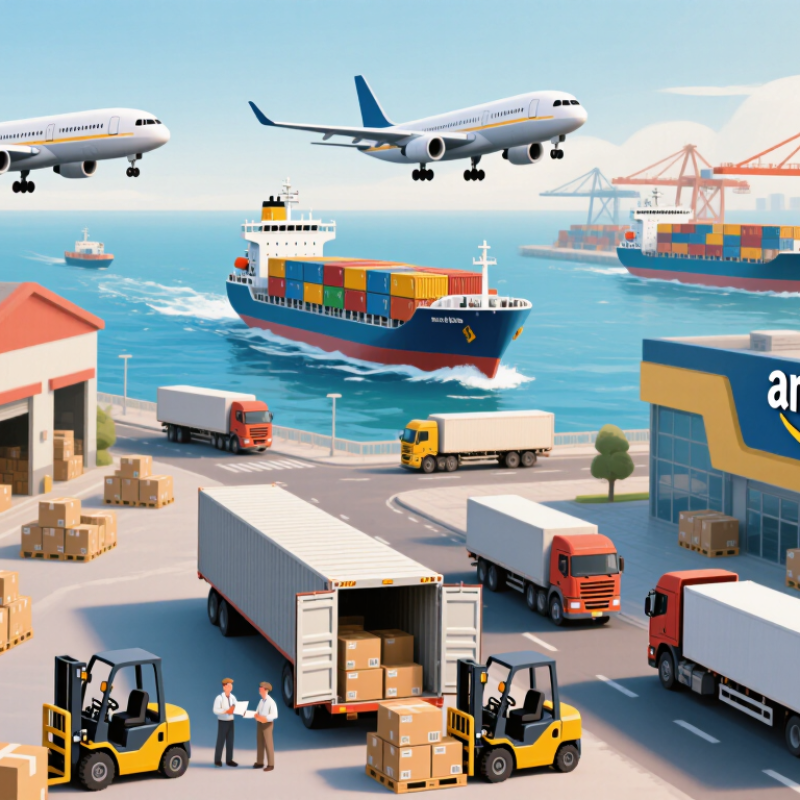
How to Ship Products to Amazon FBA from China

Define Product Compliance with HS Codes and CBP Import Requirements

How to Ship Products to Amazon FBA from China

Before shipping, define the product accurately with the correct HS code. The code affects duty rates, admissibility, documentation, and possible government agency review. A supplier’s suggested code is only a starting point. Confirm the United States tariff classification, usually the full ten-digit HTS code, with a qualified customs broker or trade specialist.

Describe the item by its material, function, components, and intended use. For example, a stainless-steel kitchen tool may require different treatment from a battery-powered device. Keep product drawings, ingredient lists, test reports, purchase invoices, and photographs together. These details help support the classification when CBP asks questions. Small details matter.

The importer of record remains responsible for truthful entry information, even when a logistics provider files the entry. Prepare a commercial invoice, packing list, bill of lading, country-of-origin marking, and customs bond when required. Check whether the product needs safety testing, labeling, or permits before departure. FBA receiving does not replace customs compliance. Duties may also change because of origin, customs value, classification, or additional trade measures. I would not trust an old spreadsheet without review. Rules and product designs change. Keep entry records for the required period, and inspect a sample shipment before sending thousands of units.

Compare China–Amazon FBA Freight Modes by Cost, Transit Time, and CBM

How to Ship Products to Amazon FBA from China

Compare China–Amazon FBA Freight Modes by Cost, Transit Time, and CBM

Shipping from China to Amazon FBA is rarely about choosing the lowest freight quote. The best option depends on carton volume, delivery deadlines, and inventory risk. Air freight commonly takes 5–10 days and suits small, valuable shipments. However, its price rises sharply with dimensional weight. Ocean LCL often needs 25–40 days, including consolidation and handling. It costs less per CBM, but delays can be unpredictable. Ocean FCL usually offers the lowest unit cost for larger volumes, although a container may leave unused space. Rail freight can balance speed and cost, but availability varies by route and season.

Tips: Measure packed cartons carefully before requesting quotes. A few extra centimeters can change the billable CBM. Ask whether prices include pickup, export handling, destination charges, customs clearance, and delivery to the fulfillment warehouse. Confirm the quote’s validity period, especially before peak seasons.

My shipping records show that a cheap LCL quote is not always cheap after warehouse fees and delays. I once focused too heavily on freight cost and underestimated the value of two weeks of lost inventory. That mistake changed my planning. I now compare total landed cost, not just the transport line. For urgent replenishment, I may combine a small air shipment with a larger ocean shipment. It costs more initially. Yet this reduces stockout pressure and gives better control over cash flow. Use accurate commercial documents and work with qualified logistics and customs professionals. Rates and clearance requirements can change. Check the details before booking.

How to Ship Products to Amazon FBA from China — Compare China–Amazon FBA Freight Modes by Cost, Transit Time, and CBM

Indicative planning comparison for general cargo shipped from mainland China to fulfillment centers in the United States

Freight Mode Typical Cost Basis Indicative Freight Cost Typical Transit Time Practical Shipment Volume CBM Considerations Best Use Case Main Limitations
Express Courier Per chargeable kilogram US$7–15/kg 3–7 days Usually below 0.5 CBM Dimensional weight may apply when the package is large but light. Samples, urgent replenishment, and small test orders Highest cost per kilogram; less suitable for regular high-volume FBA inventory.
Air Freight Chargeable weight, usually with a minimum shipment weight US$4–9/kg 7–14 days Approximately 0.1–5 CBM Airlines commonly calculate chargeable weight using the higher of actual weight and volumetric weight. Medium-size, high-value, or time-sensitive products More expensive than ocean or rail freight; capacity and fuel surcharges can change.
Rail Freight Per kilogram for consolidated cargo or per container for full loads US$2.50–6/kg 18–30 days Approximately 1–30 CBM Suitable for consolidated shipments and some full-container movements, depending on the route. Inventory requiring a balance between speed and ocean-freight cost Availability, routing, border procedures, and final delivery arrangements may affect timing.
Ocean Freight — LCL Per cubic meter, with minimum-volume and destination charges US$120–250/CBM for ocean freight; total delivered cost is higher 30–50 days Approximately 1–15 CBM LCL is generally considered when the shipment does not efficiently fill a container; handling fees can be significant. Small and medium replenishment orders with flexible delivery dates More handling points, possible consolidation delays, and greater risk of carton damage than FCL.
Ocean Freight — FCL 20-Foot Container Per container US$2,000–4,500 per container before duties and final delivery 30–45 days About 28–33 CBM of usable cargo space Actual usable capacity depends on carton dimensions, loading method, weight limits, and cargo regulations. Large, dense shipments with stable demand Requires enough inventory to justify a full container and ties up working capital for longer.
Ocean Freight — FCL 40-Foot High Cube Per container US$3,000–6,500 per container before duties and final delivery 30–45 days About 60–68 CBM of usable cargo space The larger internal volume is useful for lightweight, bulky products, subject to maximum gross-weight limits. High-volume products and planned seasonal inventory Long lead time, container-rate volatility, and potential storage costs if demand is overestimated.
Planning notes: The ranges above are indicative market estimates in USD for general, non-hazardous cargo and are not quotations. Actual costs may include origin handling, export documentation, customs brokerage, duties, taxes, Amazon appointment or delivery charges, fuel surcharges, peak-season fees, and inland transportation. Transit time normally runs from carrier departure in China to delivery near the U.S. fulfillment network and can vary by port, customs clearance, product type, and final destination.

Meet Amazon FBA Carton Standards: 25-Inch Limits and 50-Pound Caps

Shipping products from China to Amazon FBA requires carton control before cargo leaves the factory. Standard cartons should not exceed 25 inches on any side. The usual weight ceiling is 50 pounds per carton. These limits matter during receiving, storage, and warehouse handling. A carton measuring 25.2 inches may create rework, relabeling, or delivery delays. Confirm the packed size, not the product size.

Chinese suppliers should weigh sealed cartons on a calibrated scale. Record length, width, height, gross weight, carton quantity, and product count. Keep heavy items low and centered inside the carton. Use corner protection when products can shift during ocean or air transport.

The 2024 State of Logistics Report from CSCMP valued U.S. logistics costs at 2.58 trillion dollars in 2023. Small packaging mistakes can become expensive after several handoffs.

Parcel volume also keeps rising. Pitney Bowes reported 161.8 billion parcels worldwide in 2023. That pressure makes predictable cartons more valuable. Still, I would not treat the 50-pound limit as a design target. A 49.8-pound carton is difficult to handle safely and may become heavier after packaging changes. Trial packing is essential. Ask the supplier for photos, carton measurements, and a random weight check before shipment. Mistakes happen, especially when factories reuse carton specifications. Review them again.

Prepare Commercial Invoices, Packing Lists, Labels, and Customs Data

How to Ship Products to Amazon FBA from China

Prepare every document before the cargo leaves the factory. A commercial invoice should show the seller, buyer, product description, quantity, unit value, currency, and country of origin. Keep descriptions specific. “Plastic goods” is too vague for customs review. Write the material, product type, and intended use clearly. Declared values must reflect the real transaction. Artificially low values can create delays, penalties, or extra inspections.

The packing list should match the physical cartons. Record carton numbers, dimensions, gross weight, net weight, and units per carton. Check these figures against the shipment booking. Small differences can cause large problems. Product and carton labels must be readable, durable, and placed on clean surfaces. Include the required fulfillment, shipping, and carton identification details. Do not cover barcodes with tape or place labels over seams. Customs data should remain consistent across the invoice, packing list, transport documents, and electronic filing. One wrong carton count is enough to trigger questions. I recheck every file against factory photos, but this process is not perfect. Photos may miss hidden carton damage or a changed product version. Ask the supplier to confirm the final packing details in writing. Also verify current import requirements with a qualified customs professional, because rules and data fields can change.

How to Ship Products to Amazon FBA from China

Prepare commercial invoices, packing lists, labels, and customs data before the shipment leaves China.

This reference chart groups the core information normally prepared for an international FBA shipment. Commercial invoices typically include product descriptions, quantities, values, HS codes, country of origin, and Incoterms. Packing lists focus on carton contents, package counts, dimensions, and gross or net weight. Labels identify cartons and inventory, while customs data supports classification, valuation, and clearance. Exact requirements vary by carrier, destination, product type, and customs authority.

Track FBA Delivery Performance Using ETD, ETA, and Inventory Turnover Metrics

Shipping products from China to Amazon FBA requires more than booking a vessel. Delivery performance depends on three practical metrics: ETD, ETA, and inventory turnover. I record the estimated time of departure when goods leave the factory or port. Then, I compare it with the actual departure date. Small delays often begin before loading.

ETA shows when the shipment should reach the destination port or fulfillment center. I track both dates separately. A container may arrive at the port on time but wait several days for customs, drayage, or warehouse receiving. I usually add a safety buffer of seven to fourteen days. It is not perfect, but it reduces emergency replenishment decisions. I once trusted the carrier’s first ETA too much. The shipment arrived, yet inventory became tight during receiving.

Inventory turnover helps connect shipping data with sales demand. Calculate it by dividing the cost of goods sold by average inventory for a selected period. A high turnover rate can signal strong demand, but it may also expose weak replenishment planning. I review weekly sales, available units, reserved units, and inbound quantities. For example, if stock covers only 18 days and the adjusted ETA is 24 days away, the order needs attention immediately. Keep evidence for each update, including booking records, port scans, and receiving confirmations. Clear records make delays easier to investigate and future forecasts more reliable.

FAQS

Why is the correct HS code important for imported products?

The HS code affects duties, admissibility, documents, and possible government review. A supplier’s code is only a starting point. Confirm the full ten-digit tariff code with a qualified customs professional.

What product details support tariff classification?

Describe the material, function, components, and intended use. A battery-powered device may differ from a stainless-steel kitchen tool. Keep drawings, ingredient lists, test reports, invoices, and photographs together. Small details matter.

Who remains responsible for truthful customs information?

The importer of record remains responsible, even when a logistics provider files the entry. Prepare accurate invoices, packing lists, transport documents, origin markings, and bonds when required. Fulfillment-center receiving does not replace customs compliance.

What should a commercial invoice include?

Include the seller, buyer, description, quantity, unit value, currency, and origin country. Avoid vague descriptions like “plastic goods.” State the material, product type, and intended use clearly. Declared values must reflect the real transaction.

How can incorrect values create problems?

Artificially low values can cause delays, penalties, or additional inspections. Use transaction values supported by invoices and payment records. Do not rely on an old spreadsheet. Review it again.

What information belongs on a packing list?

Record carton numbers, dimensions, gross weight, net weight, and units per carton. Match the list with the physical shipment and booking details. One incorrect carton count can trigger questions.

How should product and carton labels be checked?

Labels should be readable, durable, and placed on clean surfaces. Include required fulfillment, shipping, and carton identification details. Do not cover barcodes with tape. Avoid carton seams.

How can shipment timing and inventory risk be monitored?

Track estimated departure, actual departure, estimated arrival, and receiving dates separately. Port arrival does not guarantee immediate warehouse receipt. Add a seven-to-fourteen-day safety buffer. It is not perfect.

How does inventory turnover support replenishment decisions?

Calculate turnover by dividing cost of goods sold by average inventory. Review weekly sales, available units, reserved units, and inbound quantities. If stock covers eighteen days and adjusted arrival takes twenty-four days, act quickly. I once trusted the first arrival estimate too much.

Conclusion

Shipping products from China to fulfillment centers requires careful planning from product classification to final delivery. Start by confirming the correct HS code and reviewing applicable CBP import requirements to support accurate declarations and smooth customs processing. Compare air, rail, sea, and express freight according to total cost, transit time, shipment volume, and CBM. This evaluation helps determine the most practical option for each product and replenishment schedule.

Learning how to ship products to amazon fulfillment centers also means following strict carton preparation rules. Keep cartons within the 25-inch dimension limit and under the 50-pound weight cap unless an approved exception applies. Prepare complete commercial invoices, packing lists, shipment labels, and consistent customs data before dispatch. Finally, monitor ETD and ETA against actual performance, then connect delivery results with inventory turnover metrics. Regular tracking can reveal delays, improve reorder timing, reduce storage pressure, and maintain a more reliable fulfillment workflow.

Aria

Aria

Aria is a dedicated marketing professional with a deep passion for innovative strategies and a keen understanding of our company's product offerings. With a wealth of experience in the industry, Aria excels at crafting engaging content that highlights the unique features and benefits of our......