Choosing between air freight and sea freight is crucial for businesses. Understanding what is the difference between air freight and sea freight can impact delivery times, costs, and overall logistics. Air freight offers speed and efficiency. It is ideal for urgent deliveries, ensuring goods arrive quickly. However, this rush comes at a higher price.
On the other hand, sea freight is more cost-effective. It is suitable for larger shipments and heavy goods. The trade-off is the longer transit times. Businesses often weigh these options based on their specific needs. Is speed more valuable than cost? This question shapes logistics strategies.
Both methods have their pros and cons. Rushing a shipment might lead to increased expenses and pressure on resources. Meanwhile, opting for sea freight can lead to delays and inventory management issues. Reflecting on these aspects helps make informed decisions in logistics management. Understanding "what is the difference between air freight and sea freight" is just the beginning of the journey.
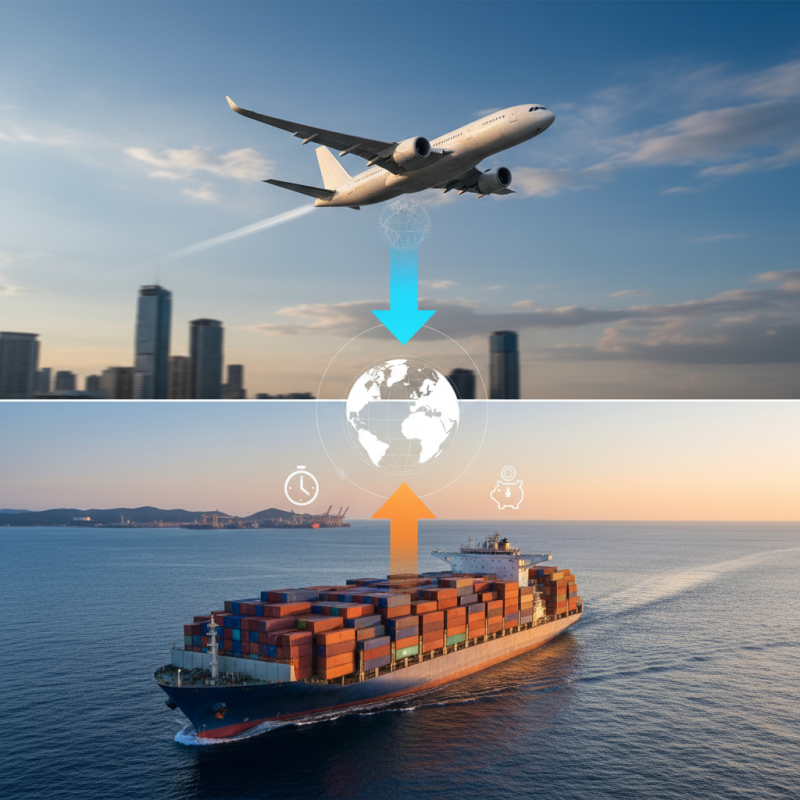
Understanding Air Freight: Speed and Efficiency in Transportation
Air freight is celebrated for its unmatched speed. Deliveries can happen within 24 to 48 hours, depending on the distance. This rapid service is crucial for perishable goods. According to a report by the International Air Transport Association (IATA), air freight accounts for about 35% of global trade by value, despite representing only a small fraction of cargo volume. Businesses thrive on this efficiency.
Moreover, the air freight process is increasingly efficient. Digital technologies now streamline customs processes and shipment tracking. In 2021, approximately 60% of air freight was transported in passenger aircraft, maximizing resource use. Yet, air freight can have a significant ecological footprint. The industry accounts for nearly 2% of global carbon emissions. This fact invites serious reflection on balancing speed and environmental impact.
Consider the cost aspect. Air freight is generally more expensive than sea freight. Prices can range from five to ten times higher per kilogram. For companies focusing on rapid market entry, these costs may be justified. However, businesses must weigh the urgency against budget constraints. This decision is not always clear-cut and can lead to tough choices in logistics management.
The Economics of Sea Freight: Cost-Effectiveness and Volume Capacity
The Economics of Sea Freight: Cost-Effectiveness and Volume Capacity
Sea freight is often more economical than air freight, especially for large shipments. It allows businesses to transport massive quantities of goods at a lower rate. This method is beneficial for companies with predictable shipping timelines. The capacity of container ships can handle thousands of tons of cargo. This scalability can significantly reduce the cost per unit. However, scheduling can be a challenge. Transit times may stretch over several weeks.
Tips: When considering sea freight, calculate your costs carefully. Evaluate whether the extended shipping time meets your deadlines. Sometimes, the savings are worth the wait. Additionally, keep in mind potential delays caused by weather or port congestion.
Understanding the volume capacity is vital for businesses. Sea freight can carry a diverse range of products. Heavy machinery, textiles, and perishables can all be shipped this way. However, certain items might not be suitable for long transit times. Some goods may require temperature controls or quick deliveries. It's crucial to assess your product’s nature before deciding on transportation methods.
2026 Best Air Freight vs Sea Freight: What is the Difference?
| Freight Mode |
Cost Per Kg (USD) |
Average Delivery Time |
Volume Capacity (CBM) |
Environmental Impact |
| Air Freight |
$5.00 |
1-5 Days |
15 |
High |
| Sea Freight |
$0.50 |
10-30 Days |
100 |
Moderate |
Comparative Analysis: Transit Times Between Air and Sea Freight
When choosing between air freight and sea freight, transit times play a crucial role. Air freight is known for its speed. Typically, air transport takes 1 to 3 days from origin to destination. In contrast, sea freight can take anywhere from 10 days to 6 weeks, depending on distance and shipping routes. The choice of air or sea transport can impact business operations and customer satisfaction.
Data from the International Air Transport Association (IATA) indicates that air cargo accounts for 35% of global trade by value. While it is faster, air freight costs are significantly higher—averaging $4.50 per kilogram compared to about $1 per kilogram for sea freight. This creates a trade-off between speed and cost. For urgent shipments or high-value goods, air freight is often preferred.
However, the environmental impact of air freight can be a concern. Air transport contributes to higher carbon emissions than sea transport. The World Bank reports that shipping via sea produces up to 40 times fewer emissions than air freight. This trade-off raises questions about sustainability and long-term viability in logistics strategies. Each method has its pros and cons that require careful consideration for businesses.
Air Freight vs Sea Freight Comparison
2026 Best Air Freight vs Sea Freight: Transit Times Comparison
This chart compares the average transit times for air freight and sea freight in days. As shown, air freight is significantly faster than sea freight, making it ideal for urgent shipments.
Environmental Impact: Air Freight vs. Sea Freight Carbon Footprint
Air freight and sea freight are vital in global shipping. When examining their environmental impact, the difference is significant. Air freight emits about 500 times more carbon dioxide per ton-kilometer than sea freight. A report from the International Maritime Organization indicates that shipping by sea accounts for just 2.5% of global greenhouse gas emissions, while air travel contributes around 12% of the transportation sector's total emissions.
Traveling vast distances by air means higher energy consumption. In contrast, sea freight's slower pace allows for greater fuel efficiency. However, sea freight often takes more time, which can lead to inefficiencies in supply chains. Reports show that while air freight covers goods quickly, its environmental cost raises critical questions about sustainable practices in logistics.
Tips: Consider using sea freight for less urgent shipments. This can greatly reduce your carbon footprint. Companies can also assess their overall logistics strategy. Are there ways to optimize routes and reduce emissions?
It's essential to reflect on our choices as consumers. The speed of air freight isn't always worth the environmental impact. When purchasing, we should evaluate our delivery options with an emphasis on sustainability.
Industry Trends: Future Projections for Air and Sea Freight Costs
Air freight and sea freight are both vital components of global trade. Understanding their costs is crucial for businesses. Recent industry trends reveal that air freight rates are expected to remain higher due to increased demand for speed and efficiency. Companies are prioritizing quick deliveries, leading to a surge in air transport. This trend can strain budgets, especially for smaller businesses.
In contrast, sea freight costs are projected to stabilize as shipping lines adapt to changing market dynamics. Large cargo ships are becoming more efficient. As a result, manufacturers may increasingly turn to sea freight for bulk goods. However, irregular delays can be a major drawback. These delays may affect inventory and customer satisfaction. Thus, businesses must weigh the pros and cons of both options.
The future landscape for logistics will see continued debates between cost and speed. Companies will need to assess their unique needs and adapt accordingly. Shifts in global trade policies could further complicate shipping trends. Keeping abreast of these dynamics is essential. More challenges lie ahead, demanding careful planning and strategy.
Conclusion
In the discussion of "what is the difference between air freight and sea freight," it is essential to recognize the unique advantages each mode of transportation offers. Air freight is renowned for its speed and efficiency, making it the preferred choice for urgent shipments. It allows for rapid transit times, facilitating quick deliveries across long distances. Conversely, sea freight is characterized by its cost-effectiveness and significant volume capacity, making it suitable for large shipments, albeit with longer transit times.
Furthermore, an analysis of the environmental impact reveals that air freight typically has a higher carbon footprint compared to sea freight. As the industry evolves, both sectors are witnessing trends that point towards rising costs and shifting dynamics. Understanding these differences is crucial for businesses to optimize their logistics strategies effectively, balancing speed, cost, and environmental considerations.

 AeroLoad Logistics